Company
JPMorganChase
Designing a centralized supplier platform for JPMorgan Chase's Legal department - consolidating fragmented data, manual processes, and three separate databases into a single, searchable tool used by thousands of internal employees.
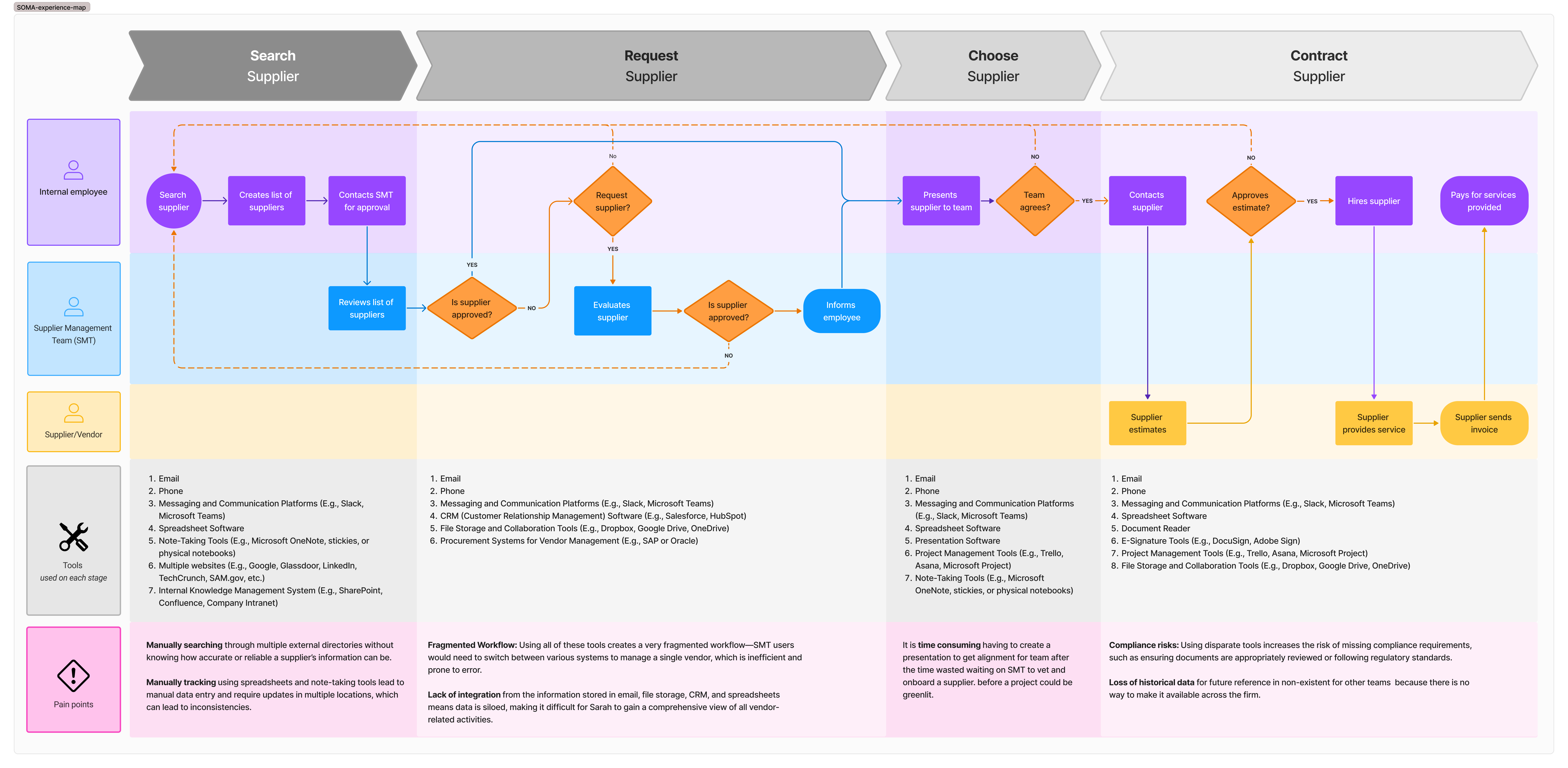
JPMorgan Chase's Legal department managed thousands of vendor relationships but lacked a centralized system to manage them. Supplier data lived across multiple databases and a separate data repository that the company had tried to consolidate for years. Internal employees searching for approved vendors had to manually comb through external directories. They then prepared presentations to justify their choices and presented them to the Supplier Management Team for approval. This process was slow, inconsistent, and completely invisible to those trying to get work done.
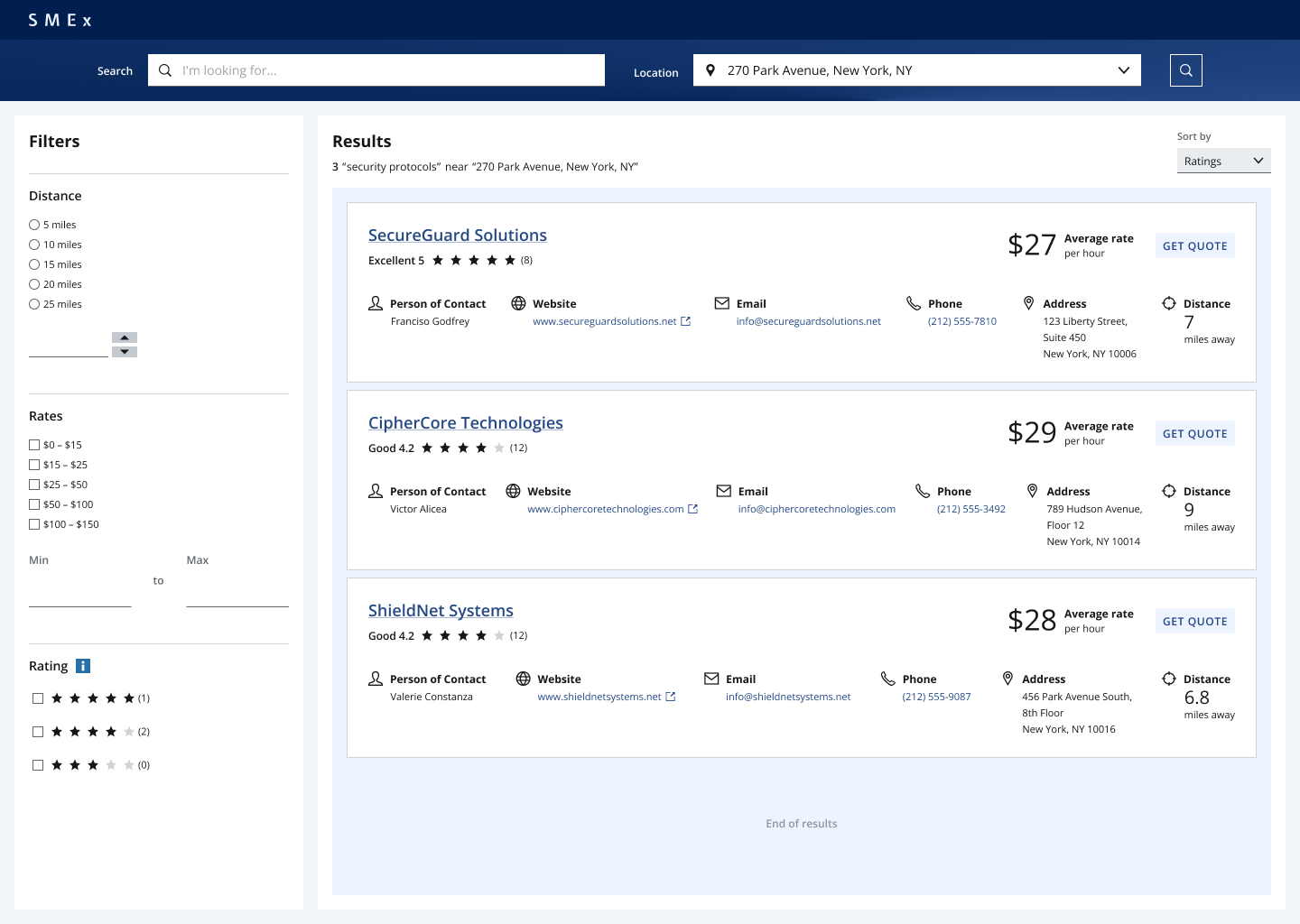
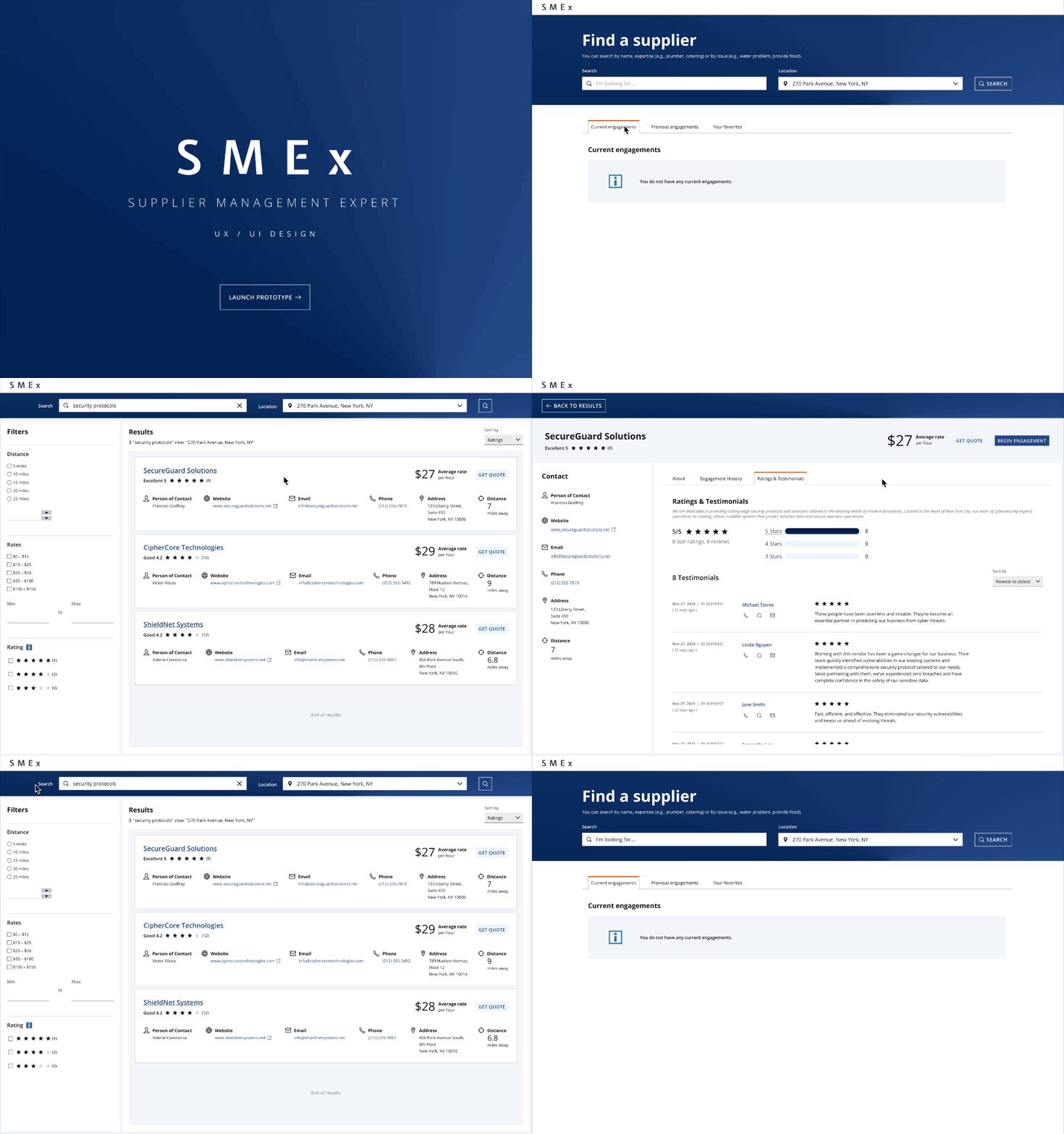
I was brought in as lead designer to help fix that. SMEx, or Supplier Management Expert, is the product we built. It is a centralized, searchable web application that gives internal teams a single place to find, evaluate, and request vendors. It also provides the Supplier Management Team with a structured solution to maintain and publish a vetted supplier list that aligns with JPMorgan's sustainability, diversity, and compliance goals.
I led design end-to-end, from the first whiteboarding session through final delivery. I was the sole designer on a cross-functional team working with a UX researcher, product manager, and engineering.
One of the most complex parts of the project happened before any wireframe was drawn. The company wanted to consolidate multiple databases and a separate data repository into one unified interface. I facilitated whiteboarding sessions with business stakeholders and product and engineering teams. We mapped the existing data, identified its locations, and defined its structure in the UI. This work directly shaped the information architecture and helped engineering plan the required data integrations.
From there, my responsibilities included:
The Supplier Management Team (SMT) at JPMorgan Chase faced a significant challenge: they needed a centralized system for managing vetted suppliers. This fragmented approach caused inefficiencies for internal teams tasked with finding suppliers for new projects. Employees often had to:
This process was time-consuming, inconsistent, and prone to errors. Additionally, it needed to align supplier selection with broader company goals, such as prioritizing suppliers with sustainable practices or minority-owned businesses. These inefficiencies delayed projects and risked missing out on the best suppliers.
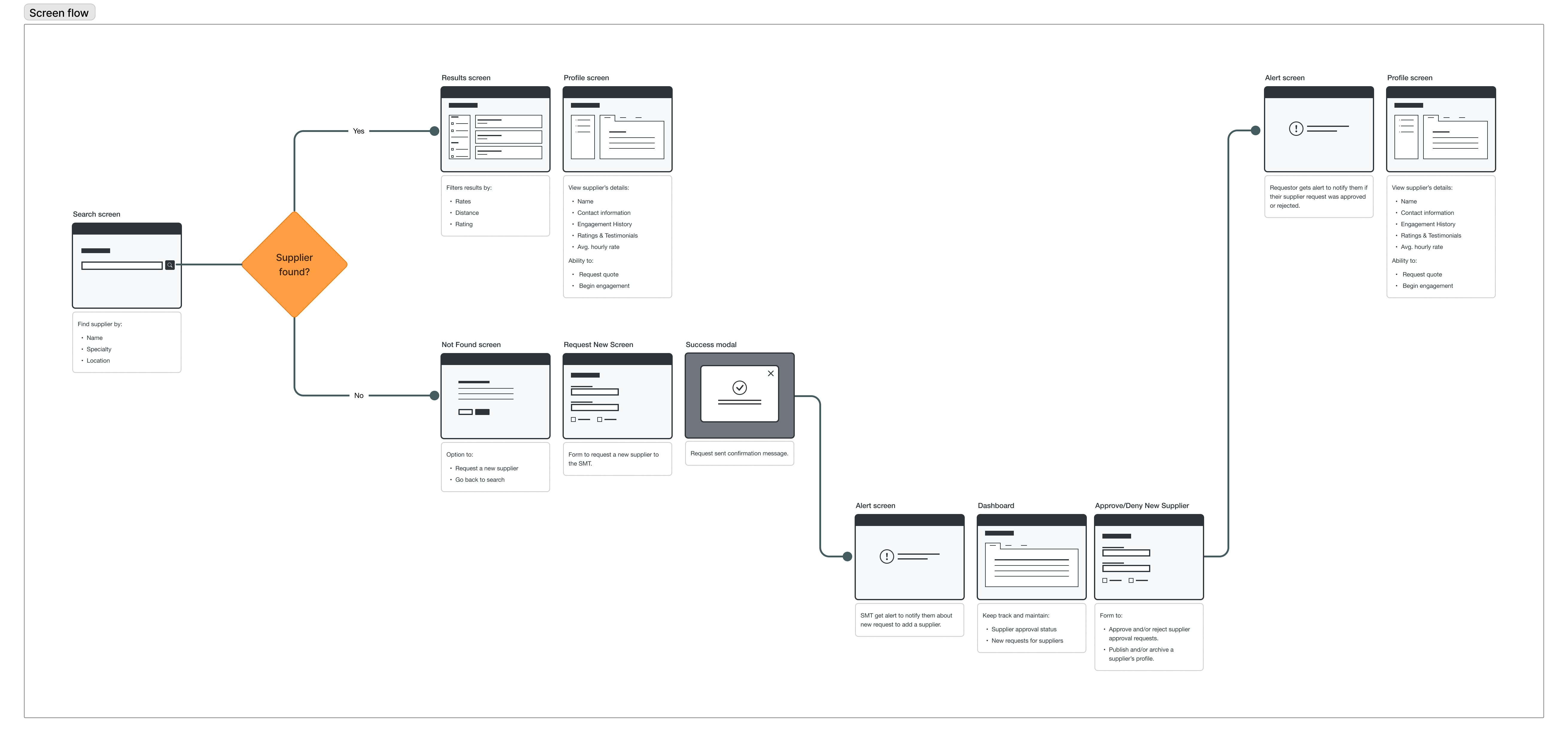
To address these challenges, we designed and delivered Supplier Management Expert (SMEx), a user-friendly web application that streamlined supplier management and selection processes. This software-as-a-service (SaaS) tool served two primary user groups:
The Supplier Management Team (SMT): Responsible for creating, updating, and managing the list of vetted suppliers. The tool enabled them to:
Internal Employees: Tasked with finding and selecting suppliers for projects. The tool allowed them to:
Key Features:
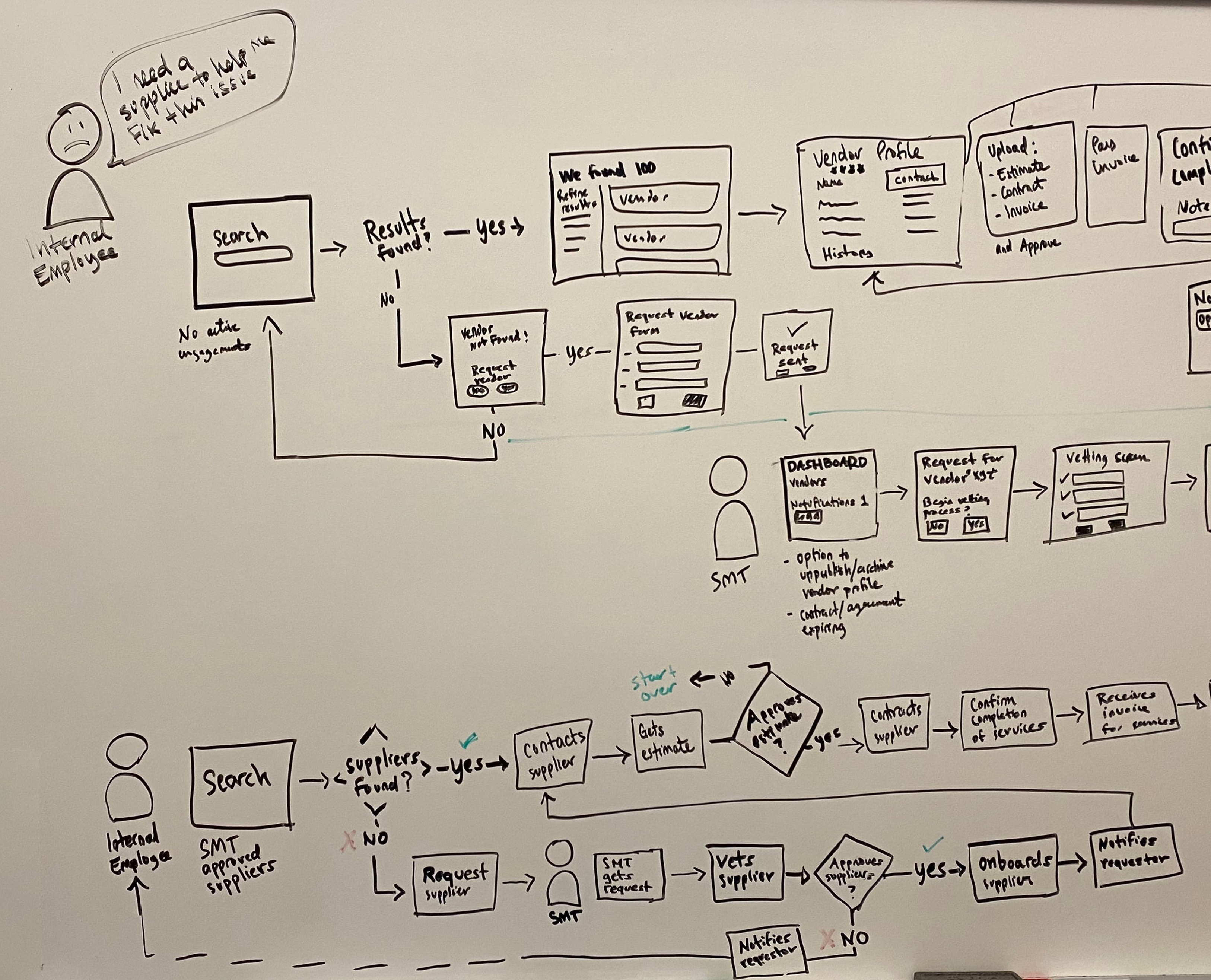
Before defining the IA, we needed to understand the data landscape. More than three separate databases and a data repository that each held different parts of the supplier picture. I facilitated sessions with business and engineering to map what existed, identify gaps, and determine what consolidation was required before the Ul could work as intended.
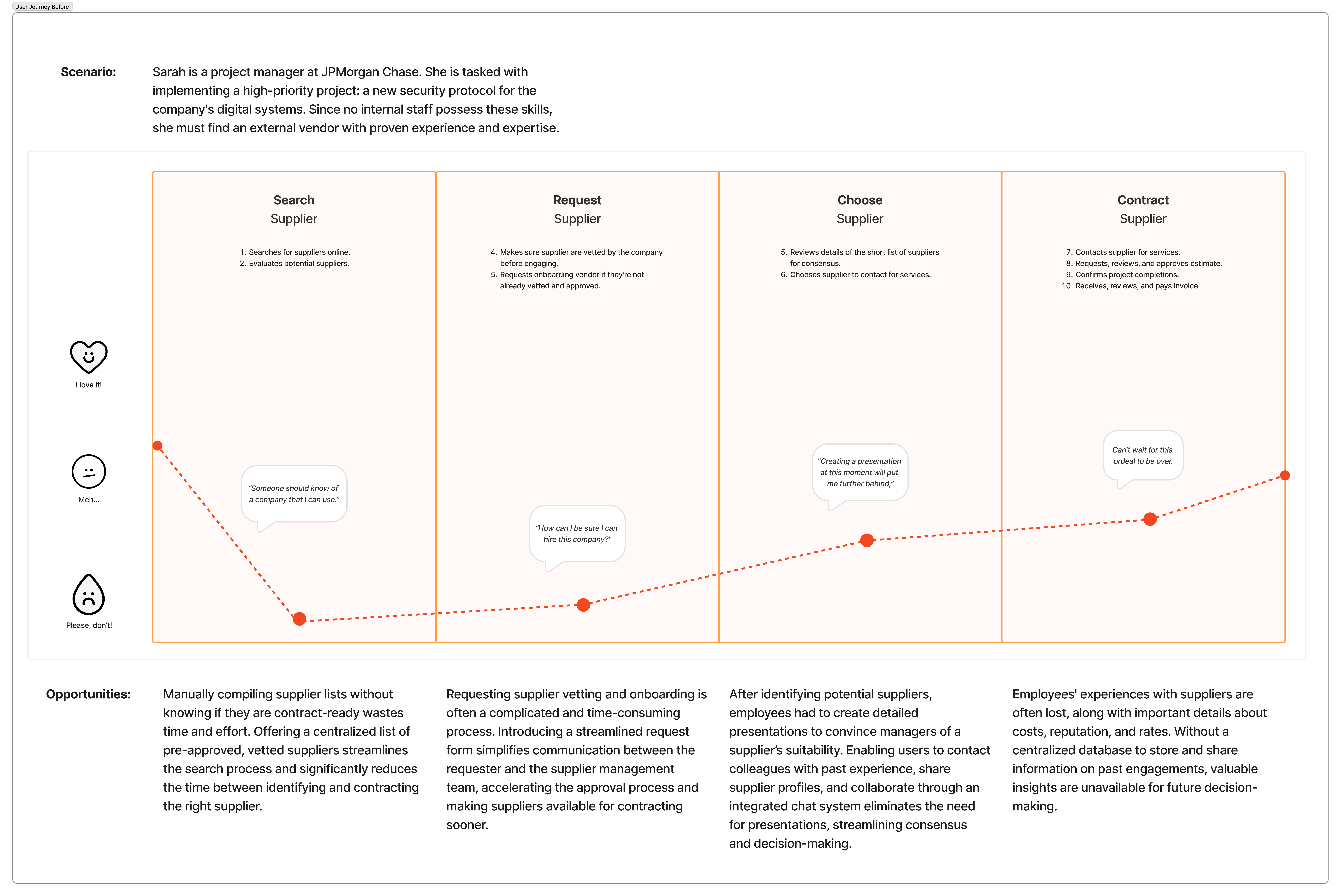

Sarah, a project manager, faced a frustrating and disjointed process when searching for suppliers. She had to:
This inefficiency delayed her project timeline and made supplier selection stressful and error-prone.
With the new application, Sarah’s workflow transformed:
The result? Sarah completed her supplier selection process in half the time, allowing her to focus on delivering her project efficiently.
User feedback highlighted several benefits:
While specific metrics were not captured, the overall response to the tool was positive, demonstrating its effectiveness in addressing key pain points.
This project underscored the importance of partnership throughout the design and development process. Collaborating closely with stakeholders during discovery ensured the tool aligned with business goals like sustainability and diversity. Involving my UX colleagues during design helped maintain consistency with other internal tools, reducing user confusion and fostering adoption.
Working with accessibility experts during implementation ensured the final product was inclusive and met the needs of employees with disabilities. Each release was delivered on time and within budget, showcasing the value of a well-structured UX process.
If I were to revisit this project, I would further streamline the vendor request process to reduce back-and-forth communication. Despite this, I am proud of the outcome, which improved workflows and made supplier selection more efficient and satisfying for employees.